
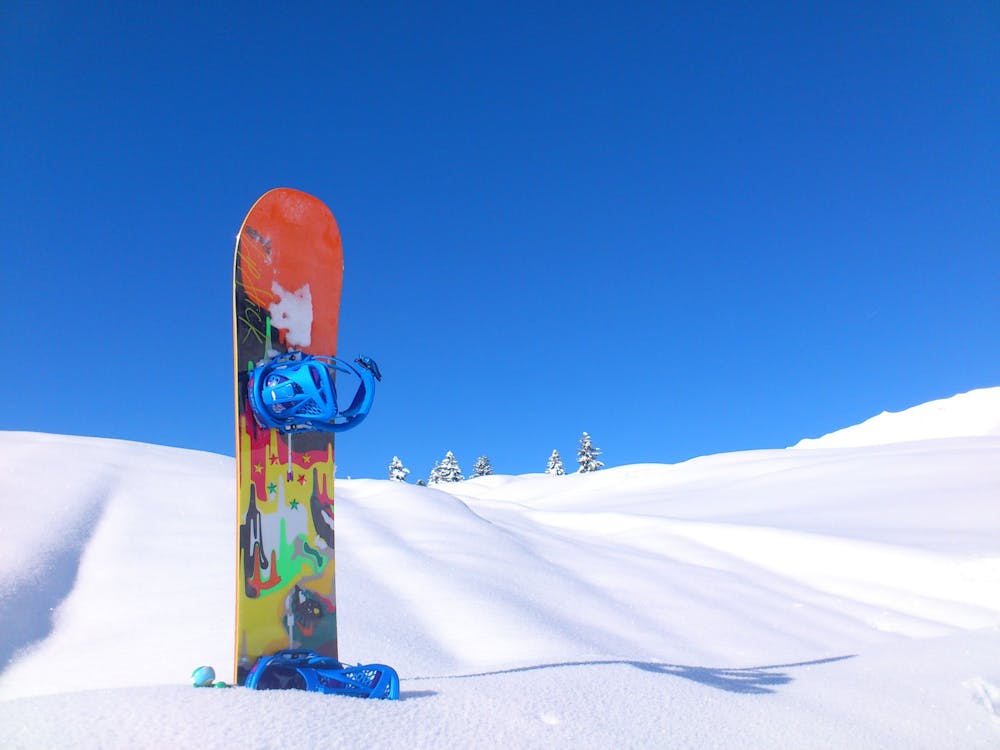
Snowboarding can easily be defended as having the Winter Olympics’ most iconic events.
Many people learned the name Shaun White after he won multiple gold medals. If I walk past a TV, plenty of Olympic sports get a few seconds of my time, but snowboarding tends to have that needed action and be more gripping to watch. Nonetheless, the history of snowboarding had plenty of ebbs and flows before its later success on the world stage.
I remember playing “SSX On Tour” on the Nintendo GameCube in late middle school or early high school, right around the time I took my first snowboarding lesson.
Trying a sport that was not similar to anything I had done prior, was an eye-opening experience. It was convenient that I found snowboarding in the mid 2000s, since it did not have the masses behind it prior to the 1990s.
In the same way that skateboarding culture was more like punk rock, both holding a more negative connotation, snowboarding at the start was put into a similar category. Nonetheless, the first modern-day starting point for snowboarding did not begin that way.
The idea of a snowboard started to take shape in 1965, when Sherman Poppen nailed two skis together to entertain his daughters so they could sled in Muskegon, Michigan. His wife, Nancy, coined the term Snurfer, blending “snow” with “surf,” according to the Vermont Ski and Snowboard Museum.
The Vermont Ski and Snowboard Museum said that in 1968, Poppen got a patent approved by the U.S. Patent and Trademark Office for the Snurfer. In that same year, Muskegon Community College organized the first Snurfer contest.
Just two years later, the first individual to be considered a “pro” was Paul Graves through Brunswick Corp, a crucial contributor to prototypes leading to the snowboards we have today.
The term freestyling is deeply ingrained in the snowboarding world. This was propelled into existence by Graves, who showcased multiple 360-degree spins during the downhill.
Along with him was Jake Burton Carpenter, founder of Burton Snowboards, at the 1979 championship in Muskegon, even though he was only allowed to compete in the special “open” category since he developed foot straps, which differentiated his board from the usual Snurfer board.
Graves assisted him in discussions with organizers to create this new category.
A few 360s does not seem like much currently, but it was the start of the avalanche that led to pros in this year’s Milano Cortina 2026 games having to perfect insane 1620s to 1800s, or four and a half to five rotations, to have a chance of getting a medal.
Recognition for snowboarding jumped with the introduction of the Winter X Games beginning in 1997 at Snow Summit in California. By the following year, jumping even higher into the public's view, in 1998, it was fully incorporated into the Nagano Winter Olympics.
Being propelled by more events globally, it is easier than ever to get onto a lift and begin the experience down the mountain. Finding a special place to enjoy nature in the wintertime and challenge one’s own body to a whole new set of skills they did not know they were capable of.
Over 20 years later, in 2020, around 7.6 million people have participated in hitting the slopes.



The Slate welcomes thoughtful discussion on all of our stories, but please keep comments civil and on-topic. Read our full guidelines here.