
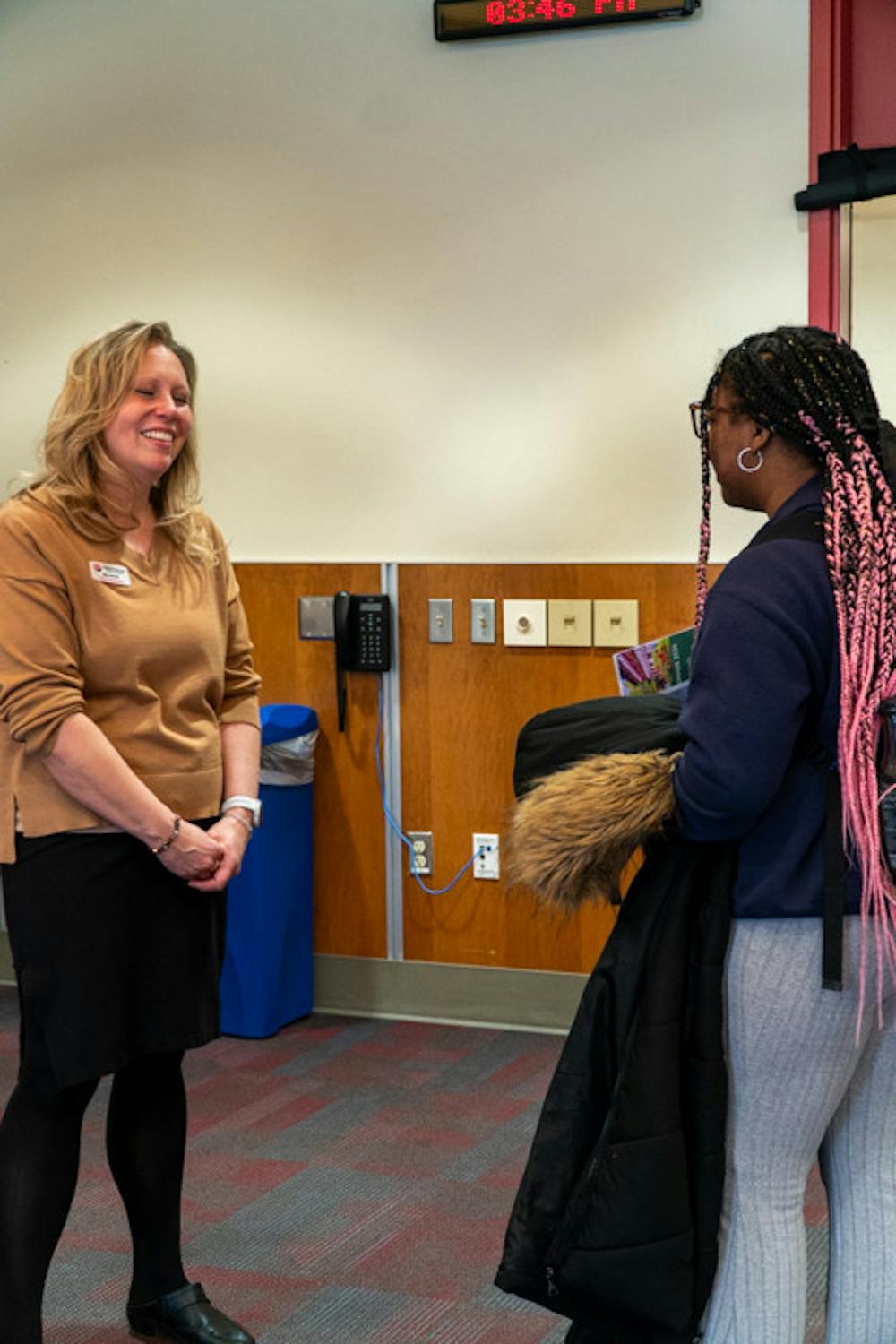
Faculty gathered on Feb. 4 in CUB 119 to share information on Study Abroad options. Locations around the globe and the experiences to have were discussed while visiting each table. Areas in France, the Netherlands, Belgium, Ireland, Scotland, Spain and Costa Rica had professors talking all about their trip’s potential.
Mary Burnett, director of Global Engagement, greeted students when entering the fair. She assisted students by pointing out opportunities for travel and offering to schedule meetings to help students attain passports or visas to meet the needs of how long students study abroad journeys would last. Financial aid and other resources are also accessible.
Expert faculty accompany students during their stay, with options for all majors to embark on the trips. Each trip would earn students varying credits toward their degree.
Burnett said the number of students applying for study abroad has gone through a bell curve over the years. A large spike happened after the covid lockdown ended, with individuals being reinvigorated to travel. The following years’ numbers dipped but then started to rise again.
Some trips have over 80 attendees, while a lot of classes led by professors usually take 8 to 16 students. Professor Pablo Delis said that his ideal number for a trip to Costa Rica is 12, yet if students are excited for the experience and want to travel, he will go up to a max of 16 students.
The France summer 2026 trip will include going to Dijon, Paris, Alsace and Normandy. Focusing on food and culture for the Comm 490 class and food and identity for the Fren 393. The course will be led by professor Blandine Mitaut and professor Carrie Sipes.
Gastronomy will be a core element, while also including visiting museums and historical sites. It will include a mix of exploring the old and modern aspects of France, including but not limited to the place of dukes, the Dijon mustard capital, details on the Eiffel tower and the engineer who oversaw its construction. Also, students may get a chance to visit the parliament building in France, Mitaut said.
The Study Abroad 2026 trip for Europe has been filled already, but the 2027 trip is already being planned and is looking to visit 5 different countries across Europe. From late May to early June, students will get to spend 20 days exploring different countries. For the 2027 trip, students can reach out to professor Mark Sachleben for details on starting the process.
The final table at the fair was Pablo Delis’s for Biology 475, to see the natural history of Costa Rica firsthand. The 11–12-day field trip will cover geology, plants, animals, culture and language, allowing students to see all the different major ecosystems Costa Rica contains, including volcanoes and Pacific tropical coral reefs, Delis said.
The professors in charge of logistics and making connections across these countries said it is extremely time-consuming and a lot of effort, but thoroughly worth it to see how much the students get to experience and grow on the journey. Plus, it is exciting for the students to see what they have never seen before.


The Slate welcomes thoughtful discussion on all of our stories, but please keep comments civil and on-topic. Read our full guidelines here.