
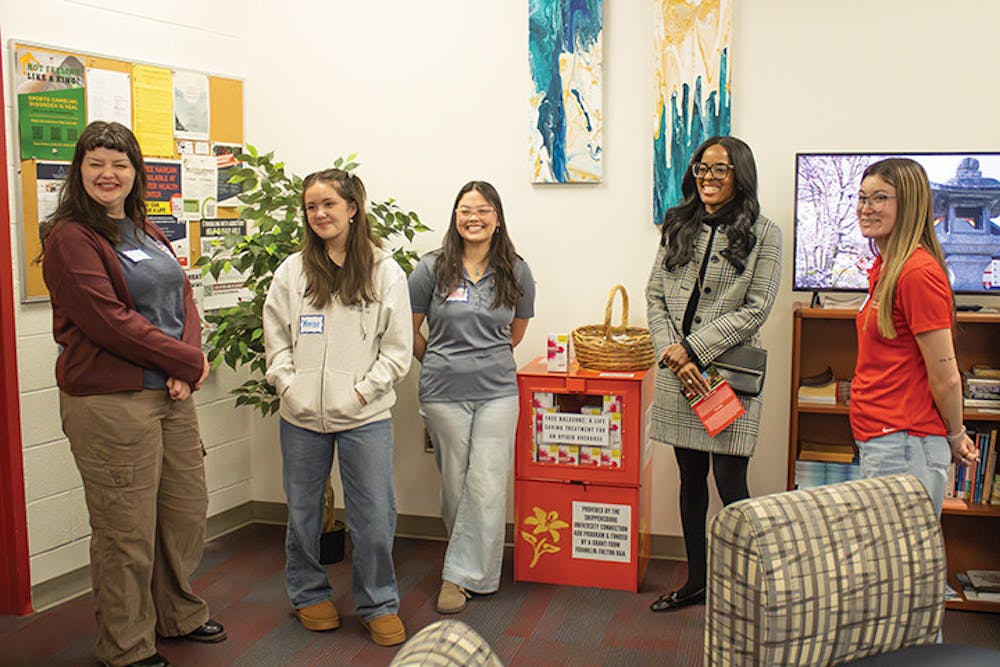



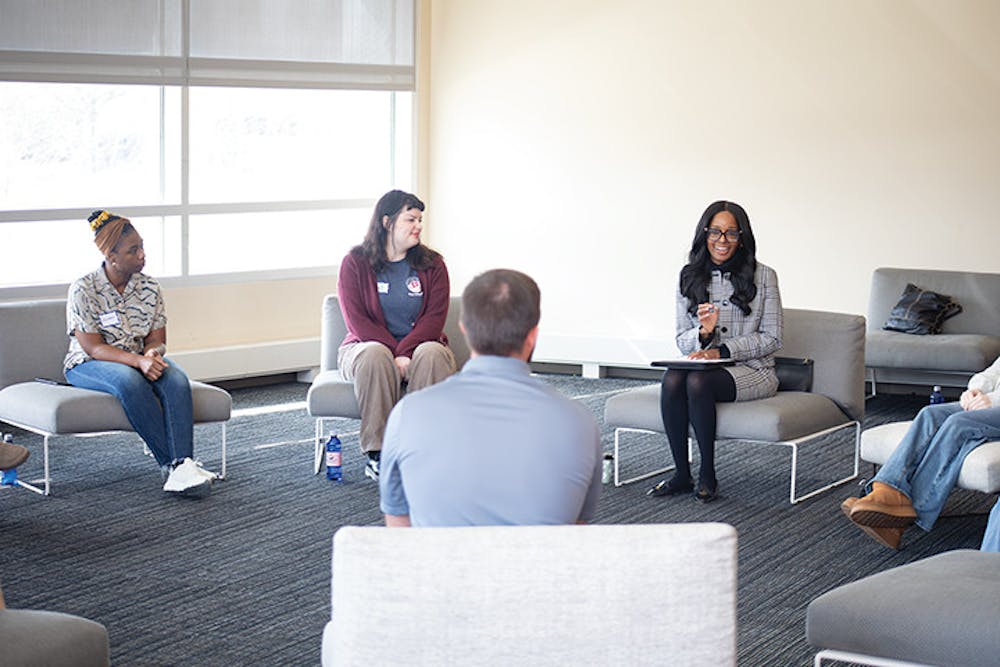
Secretary Latika Davis-Jones of the Pennsylvania Department of Drug and Alcohol Programs (DDAP) visited Shippensburg University on Thursday, March 26, as a part of the Shapiro administrations recognition of overdose prevention programs across the Commonwealth.
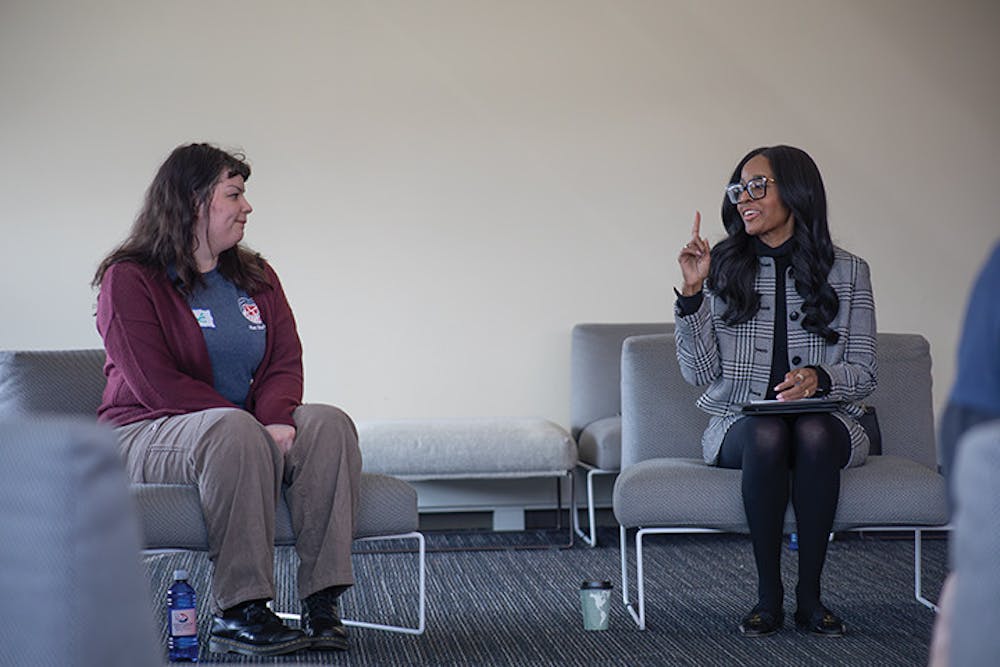
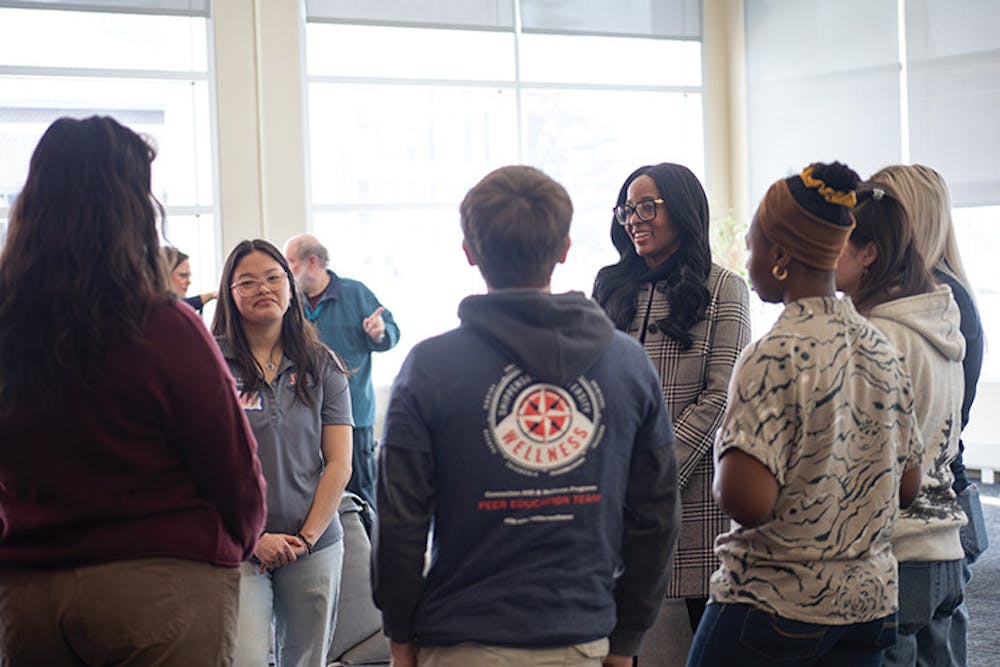
Shippensburg University was recognized as the first state university to become an overdose prevention partner, serving as a facility that provides free naloxone kits. Davis-Jones spoke with student members of the Connection Alcohol and Other Drugs (AOD) Program to hear about their naloxone accessibility work on campus.
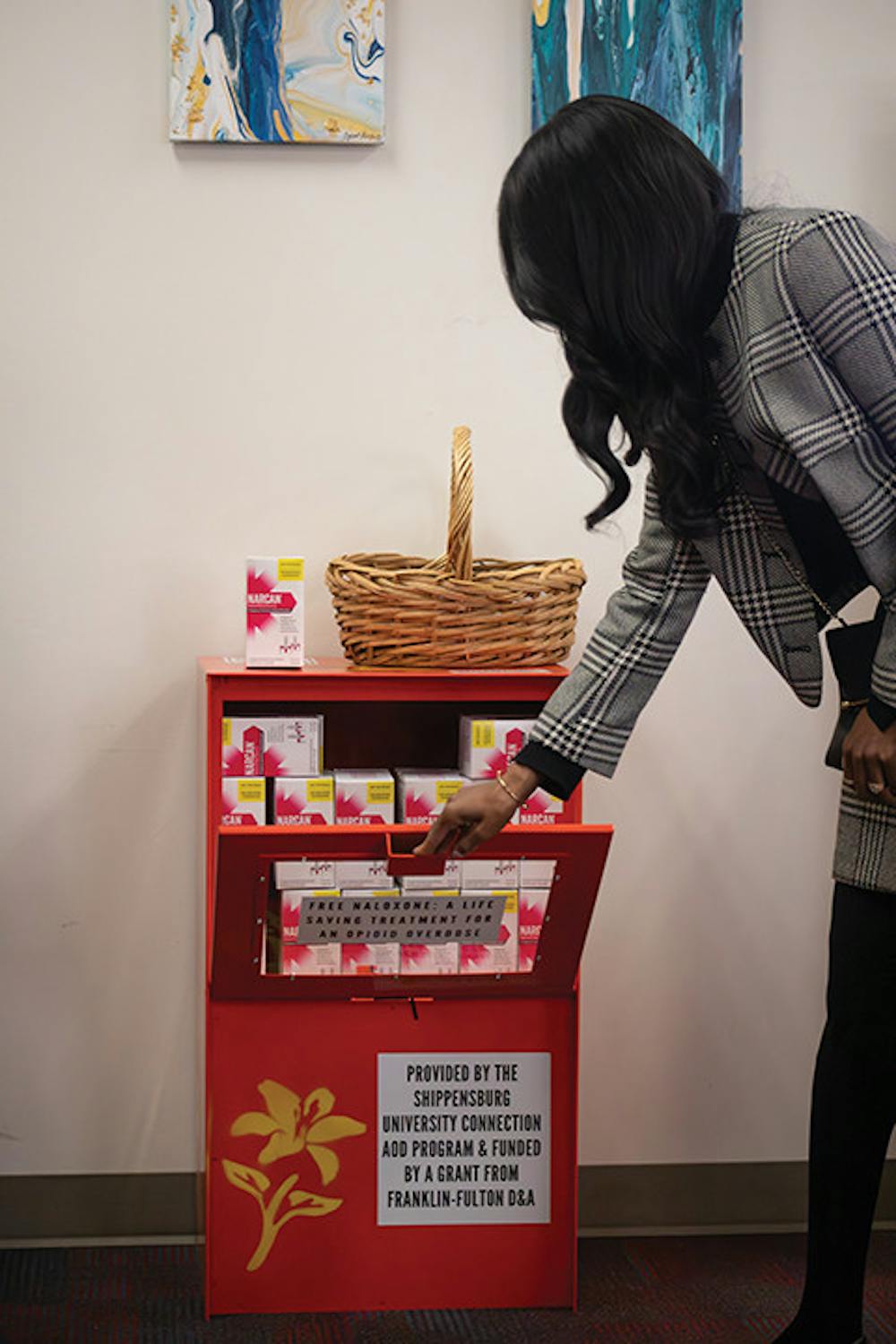
Naloxone, commonly sold under the brand name Narcan, is a medication that is used for the treatment of mild to severe opiate-induced respiratory depression, according to the American Society of Health-System Pharmacists. Narcan works to restore breathing following an overdose.
The mission of DDAP is to lead efforts in overdose prevention and recovery across Pennsylvania, including the distribution of Narcan through AOD programs on college campuses.
According to SU Connection AOD Program Coordinator Kurt Dunkel, “We received our first significant grant from DDAP to start our opioid prevention and education work in 2019, which allowed us to start a peer education team.”
That grant was the start of a significant AOD project that continues today. In 2025, the program received an opioid settlement grant from Franklin-Fulton Drug and Alcohol, which provided funds for the placement of ONEbox Narcan kits in all residence halls and many academic buildings, Dunkel explained.
The funds also provided community Narcan distribution boxes across the Shippensburg borough, with locations including The Harbor, SASHS nurse’s office, Ship Station and the Coy Public Library.
The university’s AOD program also became a DDAP Overdose Prevention Partner in 2025, which has granted them easier access to resources such as fentanyl and xylazine testing strips. The support from DDAP has made it easier for AOD to distribute kits across campus.
“Through trainings and these campus and community boxes, we have been able to distribute over 1,500 doses of Narcan,” Dunkel said. “We are happy to share that this grant has been continued for 2026 and has allowed us to purchase more ONEboxes to ensure that all residence halls and academic buildings on the campus of Shippensburg University have this emergency resource.”
Student participation on campuses plays a major part in the work of DDAP. Davis-Jones spoke about the important role students can play in recognizing and preventing substance abuse in their peer groups.
“There’s power in the youth, so we want people to understand that [overdose] can happen to anyone and work on a way that has peers educating you on these important topics,” she said. “It’s key to the work that we do.”
Work on campuses is among the many programs that DDAP is sponsoring, according to Davis-Jones. The work also includes trying to expand recovery schools across Pennsylvania, which are secondary education centers designed to assist students in recuperating from substance abuse.
“Right now, we only have one recovery school in the Commonwealth, so that is one way we are thinking about this work. We are [also] focused on prevention,” she said. The Bridge Way School, located in Philadelphia, currently serves as the first and only recovery school in Pennsylvania, according to their website.
Student voice is essential in the success of overdose prevention programs on college campuses. Wellness Program graduate assistant Brittany Lee participated in the open discussion with Davis-Jones, providing her thoughts on how the work of the Wellness Program has changed in her years at SU.
“I noticed when I first started working that there was rarely anybody that would come in,” she said. “Now we do a lot of events. We collaborate on campus. A lot of students feel a lot more comfortable to walk in.”
A major focus of the work done by AOD is reducing the stigma around reaching out for help with substance abuse issues. A concern among those in the Wellness program is that students will not get the help they need due to the fear of punishment.
“We also prioritize education that is compassionate and non-punitive,” Lee said. “Our efforts like Narcan trainings, peer-led groups and class presentations further reinforce that our goal is to support and protect the students rather than penalizing them.”
Trainings and presentations continue to accomplish goals on educating students about how to safely use Narcan. “Students are asking a lot more questions … people are more curious I would say,” Lee said. Peer-led groups have also opened up judgement-free discussions that further break down the stigma of substance abuse recovery.
Additionally, PA Good Samaritan and Medical Amnesty laws protect students when they attempt to intervene during potential substance overdose. Students may also meet privately with the AOD team to discuss concerns and receive additional support, Dunkel explained.
According to members of the AOD program, student support for their efforts has been inspiring. “Not only from organizations such as fraternities and sororities, but from various student groups and individual students who reach out to inquire about trainings and how to obtain harm reduction supplies,” Dunkel said.
Support for the program has come from more than just students. Dunkel thanked the members of community partners and leaders on campus who help coordinate the Connection AOD Program.
“It was an honor to have the Secretary join us,” Dunkel said. “We have done great work but have a long way to go. Prevention is a collective effort, and these efforts cannot be successful without our community partners, Ship students, stakeholders and leaders.”


The Slate welcomes thoughtful discussion on all of our stories, but please keep comments civil and on-topic. Read our full guidelines here.