Shippensburg University

Search
Search
News
Multimedia
Sports
Ship Life
Opinion
Subscribe
Entertainment
Send a Tip
Podcasts
Donate

Shippensburg University

°
Full Forecast

Tuesday, February 3, 2026

The Slate

Subscribe

Print Edition

  • News
  • Opinion
  • Ship Life
  • Entertainment
  • Sports
  • Multimedia
  • Send a Tip
  • News
  • Sports
  • Opinion
  • Entertainment
  • Ship Life
  • Multimedia
  • Podcasts
  • Special Issues
  • Send a Tip
  • Donate
Search

Subscribe


4/10/2017, 7:48pm

Professor examines religious practices of the Soviet Union

By Marissa Merkt
Professor examines religious practices of the Soviet Union
Marissa Merkt

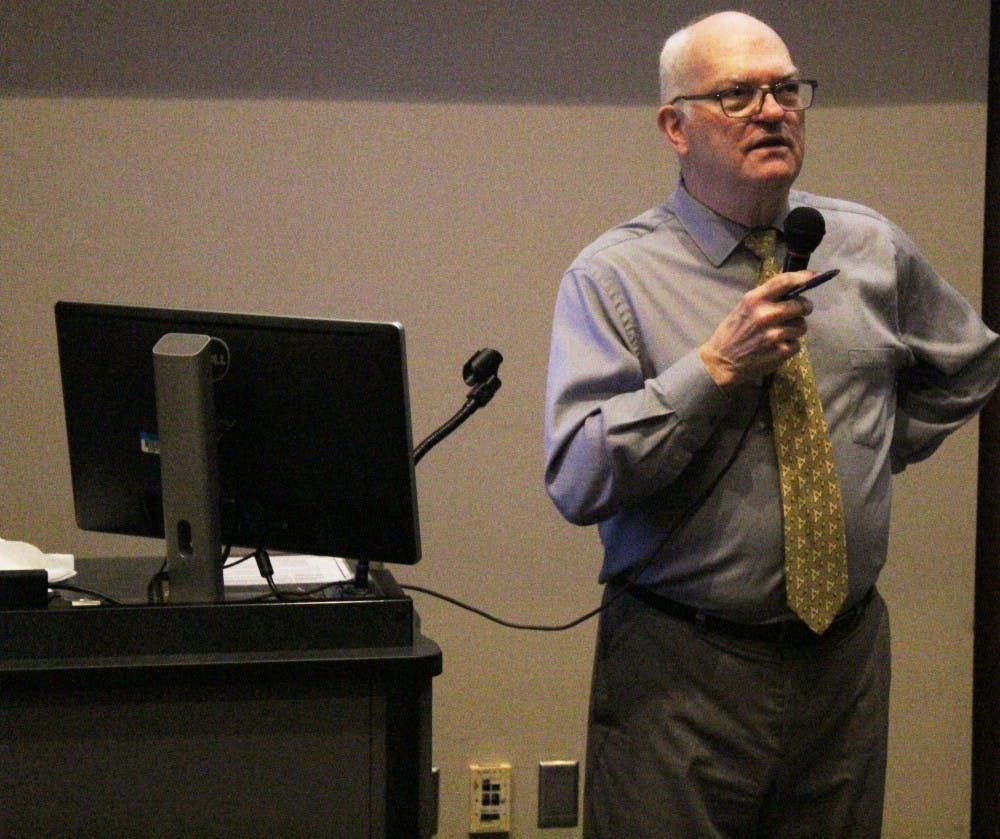
Jerry Pankhurst discusses the impact the Soviet Union and Vladimir Putin had on Russia’s modern religious practices.

Share

  • Share
  • Tweet
  • Mail
  • Print

Hot balloon-like globes rest on top of Russian churches today, celebrating their freedom they once did not have.

Shippensburg University adjunct sociology professor Jerry Pankhurst lectured on “Putin and the Patriarch: The Church-State Symbiosis That’s Shaping Russian Foreign Affairs” on April 4 in Grove Hall Forum.

During the Soviet Union, the church was outlawed. In 1937, Joseph Stalin orchestrated the bombing of the Moscow Cathedral of Christ the Saviour as part of his anti-religious movement. Soon, former churches became empty shells and the people of Russia converted to Atheism, according to Pankhurst.

In mid-1990s, former Moscow Mayor Yuri Luzhkov promised the people he would aide in restoring the Cathedral of Christ the Saviour. But he did not stop there. Luzhkov helped reclaim other former churches to be given a fresh coat of paint and reopened for service.

“He’s made the square sorta into Disney World,” Pankhurst said.

Overall, the church and state approach international issues, like homosexuality, similarly. According to Pankhurst, there is a church-state symbiosis due to similar values, interests, cultural background and lifestyles.

It has now been a quarter of a century since the Soviet Union collapsed and the effects are still felt.

“The whole nation is suffering from a PTSD,” Pankhurst said.

Pankhurst described how he and his colleagues feel Russia, Ukraine and Belarus unite to become one country. However, many of the countries are relieved to be free of the Soviet Union’s grip.

Pankhurst suggested Russia can instead create a symbolic territory where they spread the Russian culture and language outside of border lines and into other countries.

Pankhurst previously taught Russian and Central Eurasian Studies at Wittenberg University in Ohio. During both his undergraduate and graduate schooling, Pankhurst attended Moscow University.

Share


Related Stories

Various student groups led the march across campus toward the Ceddia Union Building, giving energetic chants of support for social justice and equality.

SU holds 38th annual Dr. Martin Luther King Jr. March for Humanity

By Evan Dillow

Your World Today Commentary: 93 days and counting

By Megan Sawka

Guest speakers Masaru Nakawatase, Shaakirrah Sanders and Lorraine Bannai discuss Japanese incarceration during World War II.

Student-organized panel uses Korematsu case to examine wartime limits on human rights

By Gabe Rader


The Slate welcomes thoughtful discussion on all of our stories, but please keep comments civil and on-topic. Read our full guidelines here.


Most Popular


1/28/2026, 11:55pm

SU students grow flowers and knowledge at APB’s Grow Your Career event

By Jordan Neperud / Ship Life Editor

1/28/2026, 11:53pm

First Year Experience reunites University 101 students with a Welcome Back Pizza Party


1/28/2026, 8:34pm

Green & Laukus among standouts for track & field at Bucknell


1/28/2026, 8:33pm

Men’s basketball wins third straight with victory over Mansfield


  • About
  • Contact
  • Advertise
  • Work For Us
  • News
  • Opinion
  • Ship Life
  • Entertainment
  • Sports

All Rights Reserved

© Copyright 2026 The Slate

Powered by Solutions by The State News.