
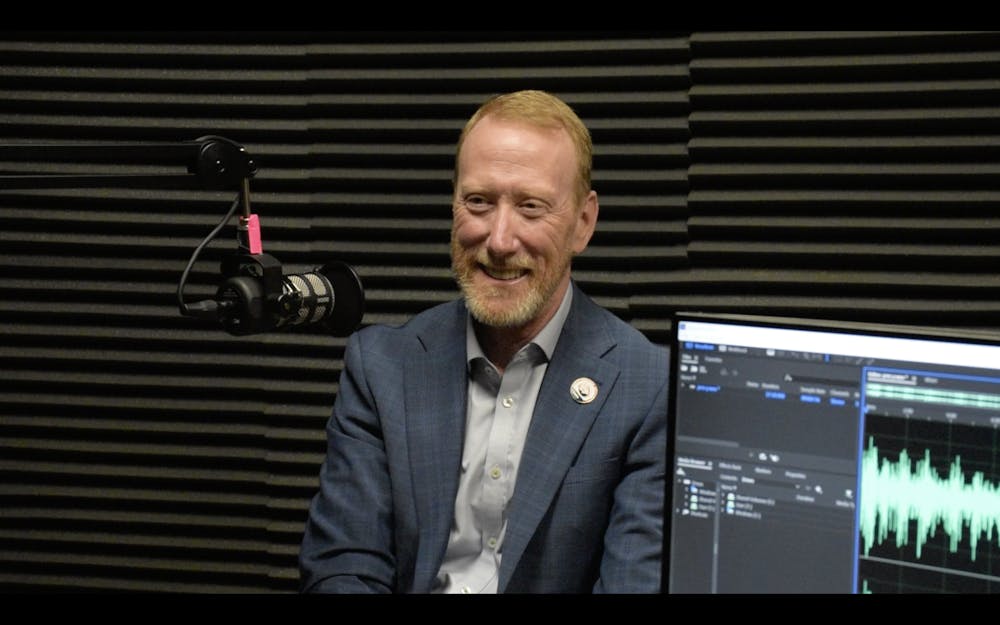
Shippensburg University President Charles Patterson said the university’s future will depend on how well it supports students, strengthens its connection to downtown Shippensburg and builds new opportunities through entrepreneurship.
In an interview with The Slate last week, Patterson said one of the biggest lessons for SU after COVID-19 was that student success cannot be measured only by academics. He said the university has had to think more holistically about what students need, pointing to tutoring, wellness support, accommodations and other services that help students stay enrolled and complete their degrees. He also described empathy as one of the lasting lessons from the pandemic and said the university came out of that period stronger because it was pushed to better understand student needs.
Patterson also pointed to the redevelopment of Kriner Hall as one of the university’s biggest forward-looking projects. He said he has raised “a little short of $3 million” in private donor money for the effort, which helped leverage additional state and federal support. He described the project as an entrepreneurship hub meant to connect student innovation with regional business development.
He said the project is designed to bring together the Diller Center for Entrepreneurial Leadership and Innovation, the Morgan Makerspace and the Small Business Development Center in a more unified space, making it easier for students, faculty and outside partners to work together.
Patterson repeatedly tied the university’s future to the health of the borough around it.
He said downtown Shippensburg and the university have a “synergistic” relationship and argued that each depends on the strength of the other. Students and their families, he said, do not judge a campus in isolation. They also notice the condition and energy of the town surrounding it.
That point came through most clearly when he discussed student life off campus. Patterson said students need a downtown they can actually use — a place where they can go, gather and spend time. His comments suggested that SU cannot be only a campus-centered experience and that the borough is part of how students experience the university.
The interview also offered a glimpse into how Patterson sees leadership. Asked what he would have thought if someone told him as a young student that he would one day become a university president, Patterson said that person would have been “foolish.” He said he never planned on the traditional tenure-track path and instead found himself drawn early to administration through service on boards, committees and other university leadership roles.
Patterson also touched on transparency, student media and campus climate. He said students should be able to come to Shippensburg and “find their place,” connecting that to a broader goal of belonging on campus. He also said campus leadership has to stay focused on risk assessment and resiliency.
Taken together, Patterson’s comments outlined a post-pandemic agenda centered on stronger student support, entrepreneurship and deeper town-gown ties.


The Slate welcomes thoughtful discussion on all of our stories, but please keep comments civil and on-topic. Read our full guidelines here.