
“An act of violence against one is an act of violence against many,” professor Jayleen Galarza said, setting a tone for the ninth annual Criminal Justice Symposium.
Previous years have focused on topics such as rap music and racial profiling, but this year Stephanie Jirard, the event’s moderator, was motivated by a story she heard about a Nevada rancher’s retaliation against the government.
In March 2014, the government seized Cliven Bundy’s livestock for grazing on government land, which caused armed protestors to face off with authorities. The story inspired Jirard to want to understand hate, and she hoped her students would feel the same.
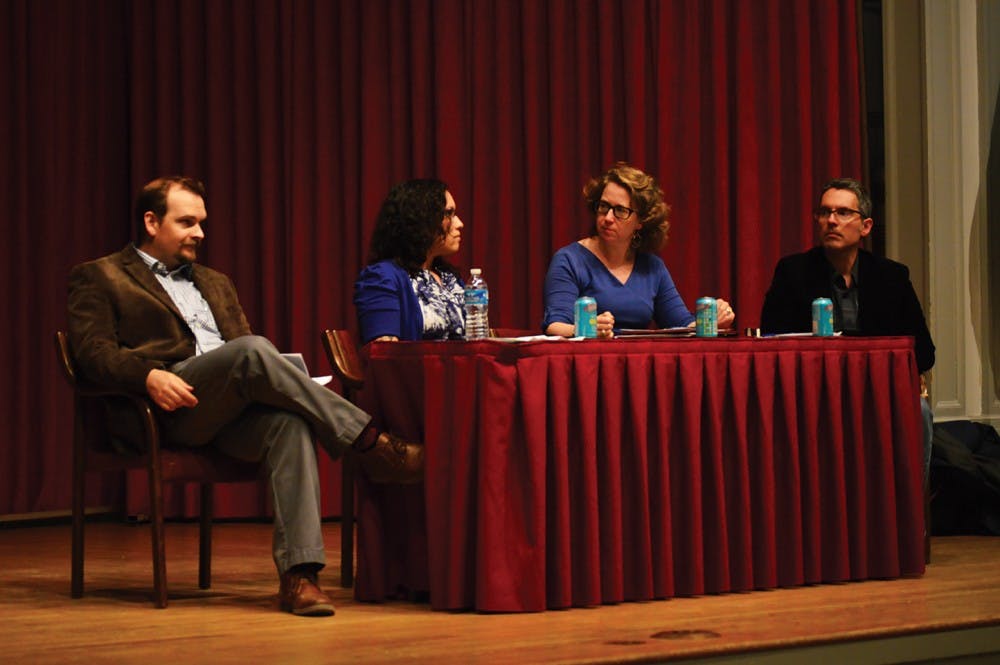
Jirard, an associate professor of criminal justice, hosts the annual hour-long discussion, which was in the Old Main Chapel on April 16, for her students to discuss topics that are relevant to issues they face today.
The four professors on the panel were Matthew Fetzer of the criminal justice department; Galarza from the social work department; Steven Haase of the psychology department and Alison Dagnes of the political science department. All offered their expertise on the topic.
“It’s not a debate,” Jirard said, who wants each of the professors to offer their perspective on the topic. She hopes this will help students learn something new.
For the criminal justice perspective, Fetzer explained how law enforcement handles and classifies hate crimes. Hate crime is considered a criminal offense against a person or property that is motivated by bias, according to Fetzer.
It is hard to determine if a crime is a hate crime because the offenders are not often caught, and police have to determine the motive.
The social work perspective focused on the idea of “othering” groups of people. Galarza focused on the experiences of people in the LGBT community.
Since January 2015, between six and 10 transgender women of color have died, but it was not considered a hate crime, according to Galarza.
The violent crimes toward people of multiple target groups have not been classified as hate crimes, but Galarza explains this only makes stopping these acts more difficult.
Haase offered a perspective on motives behind these crimes. The biggest perpetrators of them, according to Haase, are young males who are motivated by thrill, retaliation and defensiveness. These crimes are spurred by those who strive for social dominance, and a violent interpretation of emotion.
“One [solution] is don’t hate,” Haase said, on the possible solutions to end the crimes. He explained the idea of cognitive reappraisal, a way of assessing situations from a more neutral positive mindset.
Dagnes discussed how hate groups become active in the U.S. She cited the downward turn of the economy, increase of liberalism in the U.S. and diversity as reasons for the upturn in hate groups. One of the largest threats to the U.S. is the rise in anti-government patriot groups. According to Dagnes, these groups commit an act of domestic terror every 34 days. The government crackdown on these groups has slowed their growth.
4/21/2015, 12:18am
Hate crime symposium brings new perspectives to students

The Slate welcomes thoughtful discussion on all of our stories, but please keep comments civil and on-topic. Read our full guidelines here.