
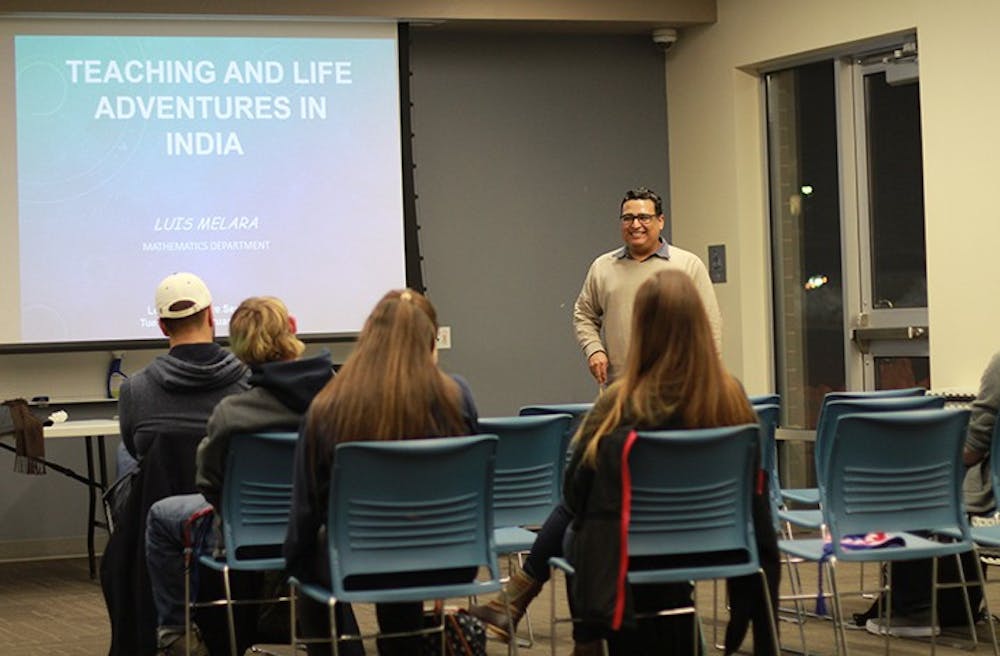
Math professor Luis Melara shared his life and teaching experiences during a lecture Tuesday evening about when he spent seven months in India.
Melara was able to teach in India because of a Fulbright scholarship. He said it took a while to get ready to travel because he was not sure how to prepare. Fulbright gave him a handbook that advised him about his trip and outlined many diseases. Melara said he and his wife spent about $1,000 on vaccines. They also had to request visas and documents that would allow them to travel.
After a difficult trip to India, Melara found that communicating was much more interesting than he imagined. Even when some people spoke English, it was hard to understand since they spoke British-English and words and phrases were different. When Melara visited Hyderabad, he was surprised because people thought he was from India.
“I think being in India has opened up my eyes to who I was, how did people perceive me, the dynamics between my wife and myself,” Melara said. “Because I look Indian, they actually thought I was a tour guide at times or the driver.”
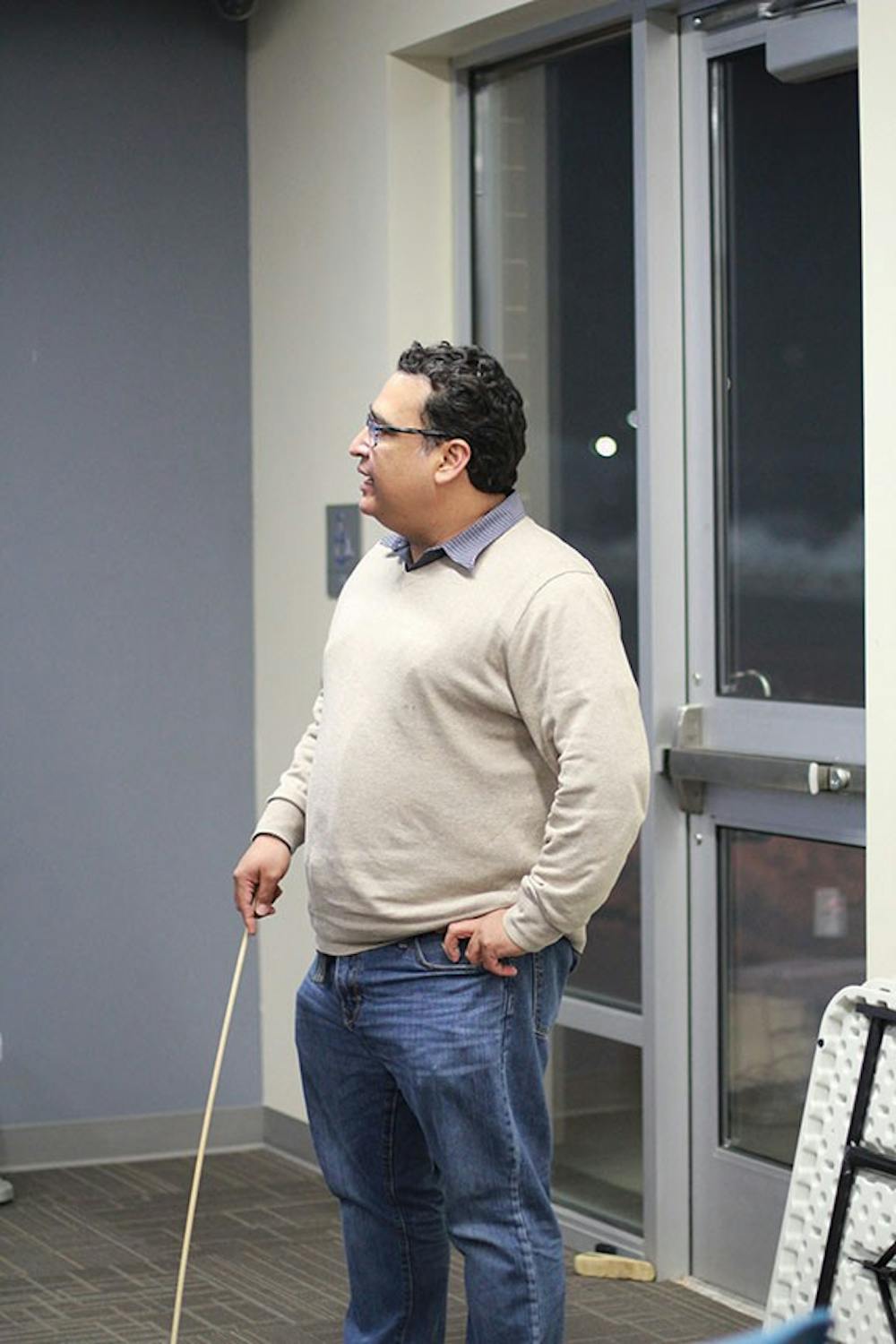
Melara recounted many of the different cities he encountered on his 8 month trip. Eventually, he began to think of Bhubaneswar as his home away from home because it was where he taught.
He was also surprised by the news in India. Most stories were focused on the presidential election because it was 2016, and they were also focused on what Indian-Americans were doing in America.
While in Bhubaneswar, he was surprised that there were so many stray cows on the roads. They would sit on the side of the road, and if they were in the middle of the road drivers would simply drive around them.
While in Bhubaneswar, Melara taught at the Indian Institute of Technology. Students at the school were supposed to be elite, but he found that some of them struggled in his class. He taught about 80 students, but there are only four majors at the school and they are all strictly engineering. Classes were two hours long and in most classes there were more men than women. Melara found it strange that the students would stand up when he entered and left the room. If a student was late, he said they would stand at the door and wait for him to acknowledge them and tell them it was OK to enter the classroom.
Melara was able to do a lot of traveling while in India, and he and his wife spent a month in South Korea and Japan to end their trip. He said he found out a lot about who he was and who he was not during his time in Asia.
“If you can [find] an opportunity to spend some time abroad, I would strongly encourage you to do that,” Melara said.


The Slate welcomes thoughtful discussion on all of our stories, but please keep comments civil and on-topic. Read our full guidelines here.